
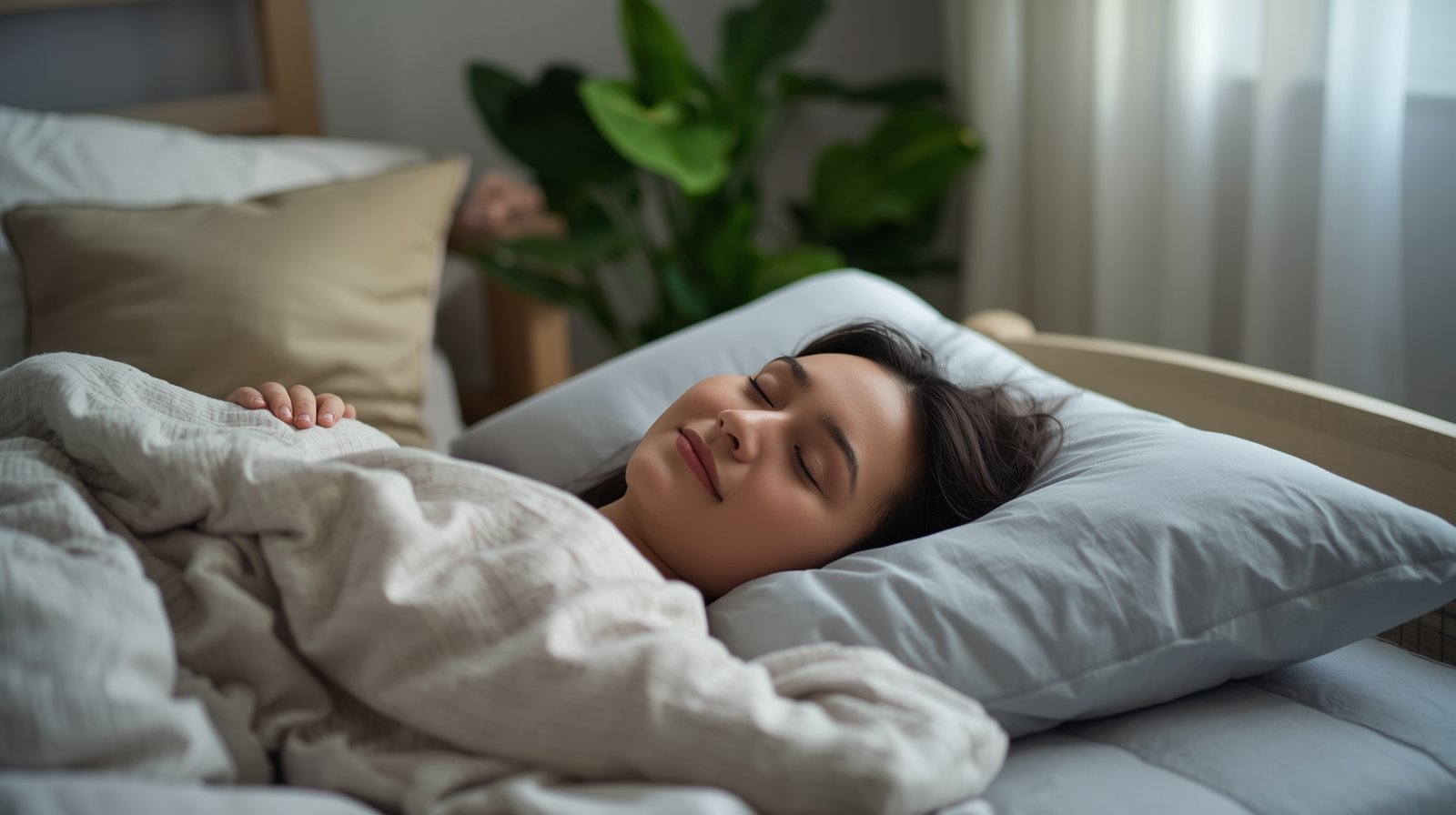

You’ve probably heard it a thousand times — “You just need more sleep.”
But here’s the truth: it’s not just about how long you sleep, it’s about how well you sleep.
Many professionals log 7–8 hours in bed yet still wake up groggy, drained, and unmotivated. Sound familiar?
That’s because true rest isn’t measured by hours — it’s built on smart sleep habits that align with your body’s natural rhythms.
According to the National Sleep Foundation, nearly 60% of adults report feeling tired at least three days a week, despite getting “enough” sleep. The missing link isn’t time — it’s quality.
In this guide, we’ll explore science-backed sleep habits that help you wake up strong, clear-headed, and fully charged, ready to take on your day with energy that lasts.
🧠 The Science of Restorative Sleep
Sleep is more than shutting your eyes — it’s an active process where your brain and body repair, recharge, and reset.
Here’s what happens during high-quality sleep:
- Deep sleep (Stage 3): your muscles recover, your immune system strengthens.
- REM sleep: your brain consolidates memories and resets emotional balance.
- Light sleep: helps transition between stages and maintain body temperature.
The Harvard Medical School Division of Sleep Medicine notes that missing just one deep sleep cycle can affect attention, mood, and productivity for up to 48 hours.
So, to wake up strong, you must train your body to move naturally through all sleep stages — that’s where smart habits come in.
1. 🌅 Sync with Your Circadian Rhythm
Your body follows a natural 24-hour rhythm controlled by your internal clock — the circadian rhythm.
This rhythm tells your body when to be alert and when to rest.
The biggest mistake? Ignoring it.
When you stay up late scrolling or working, you disrupt melatonin production (your sleep hormone), which confuses your body’s timing system.
Try This:
- Go to bed and wake up at the same time every day, even on weekends.
- Get morning sunlight exposure for 10–15 minutes to anchor your rhythm.
- Avoid bright screens 1 hour before bed — blue light delays melatonin by up to 90 minutes (Journal of Endocrinology, 2019).
⏰ Key takeaway: Consistency trains your body to fall asleep faster and wake up with energy — no alarm dread required.
2. 🕯️ Create a Pre-Sleep Ritual (Your “Wind-Down Hour”)
Most people expect to fall asleep instantly after working, eating, or scrolling — but your brain needs transition time.
Think of it as landing a plane: you can’t go from 30,000 feet (work stress) to zero instantly.
Build a 60-Minute Routine:
- 60 minutes before bed: Finish emails and screens.
- 45 minutes: Dim lights, play calm music, or light a candle.
- 30 minutes: Stretch, journal, or meditate.
- 15 minutes: Read something light or reflect on gratitude.
This gradual decompression lowers cortisol (stress hormone) and signals your brain that it’s time to rest.
According to Sleep Health Journal (2021), people with consistent bedtime rituals reported 37% better sleep quality than those without one.
🕯️ Tip: Treat your wind-down as a sacred self-care habit — not an afterthought.
3. 🛏️ Upgrade Your Sleep Environment
Your bedroom isn’t just a place to sleep — it’s your recovery lab.
If your space is too bright, noisy, cluttered, or warm, your body stays in alert mode.
Optimize Your Environment:
- Temperature: Keep it cool (60–67°F / 15–19°C).
- Darkness: Use blackout curtains or an eye mask.
- Silence: Try white noise or calming ambient sounds.
- Comfort: Invest in a quality mattress and pillow suited to your body type.
A National Sleep Foundation survey found that 73% of people sleep better in a cool, dark, and quiet room.
🛋️ Bonus Tip: Remove work devices — no laptops or phones near your bed. Your mind should associate your bed with sleep and relaxation only.
4. 🚫 Ditch the Midnight Caffeine and Late-Night Snacks
Caffeine can linger in your system for up to 8 hours, even if you don’t “feel it.”
That afternoon cup of coffee or energy drink might still be blocking deep sleep come bedtime.
Caffeine Timing Rule:
Stop consuming caffeine after 2 p.m. to allow your body to metabolize it.
Similarly, eating large meals or sugar-heavy snacks close to bedtime forces your body to focus on digestion instead of rest.
Try:
- A light snack of banana, almonds, or warm milk before bed (they contain tryptophan and magnesium).
- Avoid spicy or fatty foods 2 hours before sleep.
A Journal of Clinical Sleep Medicine study found that late-night eating delayed sleep onset by 45 minutes on average.
🥛 Pro Tip: Replace your nightly coffee with herbal teas like chamomile, valerian, or lavender for a natural relaxation effect.
5. 🧘♀️ Use Mindfulness to Clear Mental Clutter
Your brain often keeps spinning long after your body is tired — replaying conversations, to-do lists, or worries.
Mindfulness and breathing exercises reduce mental noise and activate your parasympathetic nervous system (your calm state).
Try this 5-Minute Pre-Sleep Reset:
- Sit comfortably or lie down.
- Inhale slowly for 4 seconds, hold for 4, exhale for 6.
- Visualize tension melting from your shoulders and chest.
- Repeat 10 times.
A 2020 Harvard Health study found that mindfulness before bed reduced sleep onset time by 40% and increased deep sleep by 20%.
🧘 Tip: Apps like Calm, Headspace, or Insight Timer have guided sessions perfect for bedtime.
6. 📱 Manage Digital Overload (and Blue Light)
Your phone emits blue light, which tricks your brain into thinking it’s daytime — suppressing melatonin and disrupting sleep cycles.
Even worse, social media or news content stimulates emotional centers in your brain, keeping you alert instead of relaxed.
Simple Tech Habits:
- Turn on “Night Shift” or blue light filters at sunset.
- Stop screen time at least 60 minutes before bed.
- Keep your phone on airplane mode or charge it outside your bedroom.
💡 Pro Tip: Replace your scrolling habit with a gratitude journal — it calms your mind and sets a positive tone for the next day.
7. 🌿 Natural Sleep Aids (Science-Approved)
If your sleep is still restless, nature might have solutions — no prescription required.
Research-Backed Sleep Promoters:
- Magnesium: Supports relaxation and muscle recovery (Nutrients, 2020).
- Melatonin: Helps reset disrupted sleep cycles (use sparingly for short-term).
- Valerian Root: Improves deep sleep quality (Phytomedicine, 2019).
- Lavender: Reduces anxiety and promotes calm (Frontiers in Behavioral Neuroscience, 2021).
🫖 Best Natural Sleep Drink:
Warm milk or herbal tea with honey and a sprinkle of cinnamon — simple, soothing, and effective.
8. 🏋️♂️ Exercise for Better Sleep (But at the Right Time)
Regular physical activity increases deep sleep duration and reduces insomnia — but timing is everything.
Working out too close to bedtime raises your heart rate and body temperature, delaying rest.
Sleep-Optimized Exercise Routine:
- Morning: Walk, run, or do yoga for sunlight exposure + energy.
- Afternoon: Strength training or cardio (ideal between 4–7 p.m.).
- Evening: Gentle stretches or breathing exercises.
A Sleep Medicine Reviews meta-analysis (2021) confirmed that consistent exercise improves sleep quality by 55% — especially when done earlier in the day.
💪 Rule: Move your body daily, but give it time to cool down before bed.
9. 📅 Respect the Power of Routine
Your brain loves predictability.
A stable evening routine tells your nervous system, “It’s safe to rest.”
Think of your pre-sleep routine as a habit loop — same cues, same sequence, every night.
Examples:
- Brush teeth → change into pajamas → stretch → read → lights off.
- Shower → write tomorrow’s top 3 tasks → dim lights → breathe → sleep.
Over time, your body associates these actions with sleep, making it easier to fall asleep quickly.
🕰️ Consistency = Quality.
Even a 30-minute difference in bedtime can throw off your entire rhythm.
10. 💡 Morning Habits That Boost Sleep Quality at Night
Stronger mornings lead to deeper sleep later.
What you do after waking affects your energy and nighttime recovery.
Daytime Actions That Improve Nighttime Sleep:
- Get natural light exposure within 1 hour of waking.
- Eat breakfast with protein and fiber (it stabilizes cortisol).
- Take short movement breaks every 90 minutes to avoid fatigue.
- Avoid long naps (limit to 20 minutes) to protect your nighttime cycles.
A 2023 Stanford Sleep Research study found that consistent morning routines reduce nighttime sleep latency (time to fall asleep) by up to 50%.
☀️ Rule: Better days build better nights.
11. 💤 Understand Your Chronotype (Morning Lark vs Night Owl)
Not everyone’s body clock runs the same way.
Your chronotype determines whether you feel alert early or late in the day.
- Larks: naturally wake early, prefer morning work.
- Owls: hit peak performance later in the day.
The trick is not to fight your biology — but to work with it.
🧬 Action Steps:
- Track your natural sleep-wake cycle for a week.
- Schedule high-focus tasks when your energy peaks.
- Use gradual light exposure or alarm apps to wake naturally.
According to Chronobiology International (2020), aligning lifestyle choices with your chronotype improves sleep efficiency by 32% and reduces fatigue.
12. 😴 Manage Stress Before It Manages You
Stress is one of the biggest sleep killers. High cortisol levels keep your brain in “alert” mode even when you’re exhausted.
To break that pattern, integrate micro-relaxation rituals throughout the day.
Try:
- 3 deep breaths before each meeting.
- Short walks outside to decompress.
- Journaling worries before bed — a “brain dump.”
A Behavioral Sleep Medicine study (2022) found that people who practiced 10 minutes of relaxation journaling slept an hour longer on average.
📘 Tip: End your day with gratitude or reflection — it quiets your mind for rest.
13. 🧊 Temperature and Sleep Hacks
Your body temperature naturally drops before sleep. Helping it along can speed up the process.
Sleep Cool, Wake Refreshed:
- Take a warm shower 60–90 minutes before bed — paradoxically, it cools your core body temp afterward.
- Use breathable cotton or bamboo bedding.
- Keep your feet slightly uncovered (helps heat escape).
According to Sleep Science Reviews (2018), optimal sleeping temperature is 65°F (18°C) — cooler than most people expect.
❄️ Result: You fall asleep 15 minutes faster and wake up clearer.
14. 🕰️ Master the “90-Minute Sleep Cycle Rule”
Sleep happens in 90-minute cycles, moving through light, deep, and REM stages. Waking up mid-cycle causes grogginess — that “I can’t open my eyes” feeling.
Use This Formula:
Count backward in 90-minute blocks from your ideal wake-up time.
Example: If you wake at 6:30 a.m., aim to sleep at 11:00 p.m. or 9:30 p.m.
This ensures you wake at the end of a cycle — when your body is already near-alertness.
Apps like Sleep Cycle or Rise can calculate this automatically.
⏱️ Smart hack: 6 hours of well-timed sleep beats 8 hours of broken rest.
15. 🌿 Bonus: The Power of Gratitude and Purpose
Emotional well-being and sleep are deeply linked.
People who feel grateful and purpose-driven experience fewer restless nights.
A UC Berkeley Greater Good Science Center study found that daily gratitude journaling increased sleep duration by 30 minutes and improved morning alertness by 25%.
Before bed, reflect on:
- One thing you accomplished.
- One moment of joy.
- One person you appreciate.
💛 Final Thought: Peace of mind equals peace of sleep.
🌞 Conclusion: Sleep Is Your Superpower
Smart sleep habits aren’t about perfection — they’re about consistency and awareness.
Every small choice you make — the light you see in the morning, the food you eat, the time you unplug — communicates to your body that it’s safe to rest and ready to rise.
When you align with your body’s natural rhythm, sleep transforms from something you chase into something that restores you.
You’ll no longer wake up tired.
You’ll wake up ready — calm, focused, and strong.
As neuroscientist Matthew Walker said in Why We Sleep:
“Sleep is the single most effective thing we can do to reset our brain and body health each day.”
So tonight, instead of scrolling or stressing, prepare your body for what it deserves — rest that refuels your life.
🔬 Research References
- Harvard Medical School: Division of Sleep Medicine (2021)
- National Sleep Foundation: “Sleep and Circadian Health” (2023)
- Sleep Health Journal – Bedtime Rituals and Restorative Sleep (2021)
- Phytomedicine – Natural Sleep Aids Study (2019)
- Behavioral Sleep Medicine – Stress Journaling Research (2022)
- Chronobiology International – Chronotype and Sleep Efficiency (2020)
- Journal of Endocrinology – Blue Light and Melatonin Suppression (2019)
- Sleep Science Reviews – Optimal Room Temperature for Sleep (2018)